Showing posts with label Jane Cleland. Show all posts
Showing posts with label Jane Cleland. Show all posts
Women of Mystery: Peek Under the Writer's Veil
Elizabeth Zelvin
On August 7, I participated in a panel at the Mid-Manhattan Branch of the New York Public Library, moderated by Jane Cleland, president of the New York Chapter of Mystery Writers of America and Agatha-nominated author of Consigned to Death. About 75 mystery lovers turned out to hear a lively discussion and ask questions. The other panelists were Robin Hathaway, Mary Jane Clark, and Mary Anne Kelly. I had prepared answers to Jane’s questions, and while what I wrote was not exactly what I said in the give and take of the panel, I thought the dialogue between Jane and me might be of interest.
Cleland: Are you a feminist? What does the term mean to you?
Zelvin: Absolutely. I think women are wonderful. I don’t believe they are inferior to men or incapable of achieving as much, though they’re different in some ways, and I don’t think their main purpose is to serve and support men.
Cleland: Are your characters feminists? How is that relevant to the writing?
Zelvin: Yes, they are, both men and women. Even though gender is a factor in who they are as individuals, the characters and the narrative itself takes different things for granted than you’d find in an old-fashioned nonfeminist book. For example, the male characters don’t comment about the length of the women’s legs or fall in love with them for being able to eat like a truckdriver without gaining a pound. Nobody makes jokes about women drivers or women liking shopping. There are a lot of subtle putdowns in unconsciously sexist books that you won’t find in mine—even though the male characters occasionally say, “Women!” and the female characters occasionally say, “Men!”
Cleland: If we peeked under your veil, what would we find? What's something about you that leads you to write as you do? What does your unique voice derive from?
Zelvin: Age and experience! I’ve wanted to be a writer since I was 7, and I expected to publish my first novel about 40 years earlier than I actually will. But I have a number of earlier manuscripts in the drawer, including three mysteries, and in retrospect, there’s no way I could have written Death Will Get You Sober, which I’m very proud of, without every moment of my journey up to this point. I’ve been saying for years that my vision of maturity includes a couple of archetypes that I aspire to: the Wise Woman and the Outrageous Older Woman. I think my voice shows the influence of both of those aspects of who I am today.
Cleland: Do women kill for different motives than men do?
Zelvin: Sometimes yes, sometimes no. While I’m reluctant to generalize, I’d say the type of anger behind some murders is affected by gender. Some women kill out of frustration and feelings of powerlessness—we’ve all seen them in the headlines--while some men kill out of impulsive, aggressive rage.
Cleland: Do women detect using different skill sets or strategies?
Zelvin: The temptation is to say yes, that men use reason and women use intuition, but I think it’s a dangerous generalization, and I haven’t set up that dichotomy with my male and female sleuths. From the perspective of feminist psychology, women’s emotional development does take place through connection and relationships, while men’s is a process of separation, so that women do tend to be more expressive—use relational skills--and men more instrumental—use more cognitive skills. But of course not every individual fits completely into that or any model.
Cleland: Is it hard writing male characters? What about writing strong women?
Zelvin: I ended up with a male protagonist by accident. I started out with two alternating first-person voices. I was very proud of my male protagonist’s voice because he was nothing like me. I think the autobiographical first novel is like the starter marriage—if you reach a certain age without doing it, you can skip right over it. Yet I couldn’t make my female voice too much like me, so I tried to take her over the top, and she turned out funny but a little too preachy, which is why she ended up a sidekick. I think my protagonist Bruce’s voice owes as much to his being a recovering alcoholic in early sobriety as it does to his being a guy, although he’s definitely a guy’s guy in some ways. What he’s not is a superhero or man of action, the way many male characters in crime fiction are. The men I know in real life don't punch anyone in the jaw either.
Cleland: Can you describe your writing process?
Zelvin: I have to be alone—I could never write in Starbucks like some writers I know. It works best when I can get up and go straight to the computer, start writing without talking to my husband or anyone else or even checking my email. I can’t always do this, but that’s when the work gets done. I’ve been out in the country most of the summer working on my new manuscript. Some days I can do it, and other days I have to put something else first—my husband, my granddaughters, my clients, or some other task with a deadline. Or pain in the neck maintenance tasks, like paying bills or straightening out some screwup with the bank or a plumbing or electrical crisis or going to the dentist. I have a few mantras: “I’ll write for an hour if it takes all day” is one of them. SJ Rozan says do two pages a day every day no matter what, so I tell myself I can do two pages. But I don’t really feel as if I’ve had a real writing day unless I hit 1000 words, which is four or five pages since I write a lot of dialogue. Diana Gabaldon writes 1000 words a day, and her historical time-travel series, the Outlander books, are big, fat, wonderful books, much longer than most mysteries.
Cleland: What's the most difficult part of writing? What's the most fun?
Zelvin: Oh, how I hate the first draft. My mantra is “just keep telling the story,” but until I’ve done it, I’m always afraid I won’t be able to make it to the end with everything all wound up. I’ve been very encouraged by hearing some highly successful writers say it’s the same for them, including Carolyn Hart, Nancy Pickard, and Rhys Bowen, all of whom I've interviewed for Poe's Deadly Daughters. The most fun? Having written! And okay, those moments when I’m really cooking, when it’s just coming through me. Writers in past centuries used to call it the Muse, and the spiritual expression for the same thing is “being a channel.” And when I write something clever or funny, that’s fun too.
Cleland: Under that veil--what do you think of promoting your work? Are you good at it? Do you like that responsibility?
Zelvin: I used to be very shy, and I’ve always hated sales. I had a brief but nightmarish career selling life insurance back in 1980. But so far I’m really enjoying promoting my book, because it’s all different kinds of networking. Feminist psychology says women are relational, and I love spinning a web of connections both online and face to face. I have a friend who defines schmoozing as “networking shamelessly,” and I do love to schmooze. It’s in my New York Jewish daughter-of-two-lawyers genes.
What's New With Jane Cleland?
Julia Buckley
Part of this interview with Jane Cleland was printed on Julia's blog a few months ago, but it has now been updated with new material about Jane.
NEWSFLASH: Jane's book, Consigned to Death, is one of those nominated for an Agatha for Best First Novel. Congratulations, Jane!
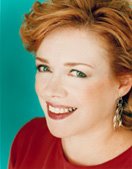
Thanks for agreeing to chat with me, Jane. What's new with you?
Well, my new novel Deadly Appraisal is about to release in hardcover (April 17) and Consigned to Death in paper (April 3)... and if you peek at my website-- www.janecleland.net -- you'll see my tour is now 50+ events and growing... and I've just updated the website (revamped)... roll your mouse over the banner at the top of the home page-- kinda fun! ... also, I've revised the book discussion questions for Book Clubs to include more targeted questions (and martini recipes)... also, for antiques fans we have a new, free promotion called "What's it Worth?" where visitors can try their hands at antiques appraisals and see how their judgment compares to that of the experts at the renowned auction house, Leslie Hindman Auctioneers! Also, I'm the new MWA/NY Chapter president ... and the new chair of the Wolfe Pack's literary awards (we're the folks who award the Nero and the new Black Orchid Novella award in partnership with Alfred Hitchcock mystery magazine).

What does being MWA New York Chapter President entail? Will there be a lot of paperwork? Meet and greets? Will you wear a sash?
Do you know MWA's motto? It's been with us since the beginning -- CRIME DOESN'T PAY -- ENOUGH. Isn't that a hoot?
What do I do as president? There are two aspects of the job: running the local chapter and serving on the National Board. It's a big responsibility. I'm always thinking how I can help our members succeed. As a start, I adhere to the Hippocratic oath: First do no harm. By that I mean that Mystery Writers of America has a 60-year history of success -- I want to help us keep doing what we've always done well -- and help us become even more relevant.
MWA is an educational foundation -- thus, our programming is very important to our success. Locally, we have great speakers--and all of our programs, effective January 2007, are available to our members, for free, as podcasts on our website--www.mwa-ny.org .
Happily, so far at least, the paperwork has been manageable.
One of my roles as president is the delightful task of meeting people and ensuring they feel welcomed by MWA. I write a personal letter to every person who joins MWA/NY. At every MWA/NY meeting, I ask who's new and invite them to stand and introduce themselves. When I attend conferences, visit bookstores, facilitate book club discussions, it is my pleasure to serve as a MWA ambassador.
Sadly, there is no sash.
Your novel, Consigned to Death, is a fun play on words. In one sense, of course, it refers to the antiques business, in which you have some experience. So, having run your own rare book and antiques store, have you ever felt “consigned to death?”
Interesting question... “consigned to death,” as in “shoot me now.” Yes, when I ran my rare books and antiques store... I occasionally felt that way—for instance, when explaining to a customer that “free gift wrap” didn’t include those items she’d purchased elsewhere, or when we foolishly opened on Superbowl Sunday and not one customer came into the store all day. Mostly though, I recall special moments—the delight of discovering a satiny-smooth leather bound book among a box of battered volumes or the look of elation on a collector’s face when he found a treasure in our shop.
You are also, according to your website, an “experienced speaker and meeting facilitator.” How did you develop experience in this area, and how does one facilitate meetings?
There are two theories to training professional speakers: hire a subject matter expert and hope they can communicate effectively or hire a really smart, excellent communicator and teach them the curriculum or subject matter you want them to deliver. I got into the industry more than twenty years ago via the second approach. I sometimes think of myself as the 7-11 of the information business—I’m very adept at distilling complex information into manageable and understandable “data chunks.” I have a behavioral slant, so all my business communications work aims to help people do something better. My clients are blue-chip: I write seminars for the American Management Association (they assign me a subject matter expert); and I develop and facilitate workshops for clients such as Pfizer and PriceWaterhouse Coopers. As to how one facilitates meetings well—well, that’s a huge subject—in fact, I offer a seminar on the topic, so it’s tough to summarize in a sentence or two, but here goes: to facilitate a meeting well, ensure that everyone in the room feels like a million bucks while maintaining an iron grip of control. I’m not being flip—those are the two qualities that excellent facilitators share. There are lots of ways to achieve these seemingly mutually exclusive imperatives, so there’s plenty of room for individual styles and personalities to succeed.
Your book has been tied in with the popular Antiques Roadshow. Do you think this has helped to contribute to its success?
First let me clarify that there is no official “tie-in” with the wonderful program, Antiques Roadshow. I was surprised when the early reviews compared Consigned to Death to the Antiques Roadshow, but, of course, I was thrilled at the comparison. I think Margaret Maron, Kirkus Reviews, and others really nailed an aspect of the book that I hadn’t really latched onto—the intriguing complexity of appraising antiques. I’m new to the writing business—Consigned to Death is my first novel. I think it’s crucial, when you’re a debut author to have a succinct way to describe your book. It helps people understand what they may be getting themselves into by starting it. Therefore, I think it’s useful that I can explain Consigned to Death as: “It’s like an Antiques Roadshow for mystery fans.” I think that’s clear and accurate.
Before writing fiction, you wrote several books on business, including Putting First What Matters Most: Proven Strategies for Success in Work and in Life. Were you a business major?
My undergraduate work was in communications, but my graduate work was in business. I earned an MBA.
How did you come up with the idea for Josie Prescott, your protagonist?
I wrote a mystery featuring a sizzling hot private eye named Tony Barnes who was based in New York City. It received the nicest rejections! Part of the message was that the market wasn’t strong for new series featuring a male private eye based in New York. I took it as a personal challenge and developed a mystery series featuring a female amateur not based in New York. I really love Josie a lot, so I’m thrilled she has come to life!
The nicest rejections--that's funny. But so true.
Since you have a great deal of business experience, are you handling your own public relations?
I’m handling a lot of it, but I have a good friend who’s helping me with some aspects of it, and I also work with an outside service as well—Breakthrough Promotions.
I’m also helping the Wolfe Pack, the fan club of Rex Stout’s Nero Wolfe books, publicize their literary awards. Starting in 2007, I took over as chair of the awards. And I’m very excited to announce that we’re partnering with Alfred Hitchcock Mystery Magazine to offer a new writing award—for best novella! Rules for submission will be posted on www.nerowolfe.org starting in October!
You have a husband and four cats. Are they a part of your business empire?
Sadly, I must report that one of our little cats has died. Very hard. We loved the little guy a lot. As to your question, I wish I had a business empire for them to be part of! I’m just a new author trying to introduce my protagonist, Josie Prescott, to as many people as possible!
You seem like a goal-oriented person. What are your goals for the next few years? Do you have a long-term goal?
I am extremely goal-oriented—and I’m always in a hurry. My goal up until a few months ago was to get a new contract. I did so—so St. Martin’s Minotaur will be publishing Josie’s adventures for years. I’ve completely thrilled!
Other goals—to keep introducing Josie to as many people as possible; to launch the Black Orchid Novella Award in partnership with Alfred Hitchock Mystery Magazine (see www.nerowolfe.org starting in October for details); to ensure that the Nero Award (I’m the chair) maintains its high quality level; to write good books; to serve well on the New York Board of the MWA; and to snorkel a lot.
Long term goal—all of the above, except more so.
You are considered an inspired speech-maker. Have you utilized this in promoting your fiction writing?
Thank you for the nice words! I don’t know about “inspired,” but it’s true that I am an experienced public speaker—all those years delivering seminars and facilitating meetings add up!
To answer your question—I’ve developed two speeches related to the Nazi theme in Consigned to Death—one is called Finding Stolen Art: A Detective Takes on the Nazi and the other is called The Politics of Stolen Art: A Legacy of the Holocaust. I’ve delivered them at Temple Israel in Sharon, Massachusetts—one to the entire congregation, and the other to high school students. They were very well received.
If any of your readers would be interested in learning more about those speeches, or a speech on another topic—such as Growing a Small Business: How to Get the Word Out—I’ll be happy to talk to them about it. They can e-mail me at jane@janecleland.net or call 212.332.9976. I’m very good about responding to e-mail, so if they don’t hear from me within a day or two, that probably means I didn’t get it! Please call!
I’m very interested in speaking at libraries, Rotary Clubs, Chambers of Commerce, and the like.
Because I’ve spent a fair amount of time researching how I can best introduce Josie (my protagonist) to people, and have had some success, I also offer a presentation on: How to Promote Your Book—20 Ideas in 40 Minutes.
Did you always want to write fiction, or is this a new discovery of your creative side?
I sort of knew I wanted to write fiction, but it was a long-sublimated desire.
Will there be more Josie Prescott adventures?
I’m trilled to report—yes! Deadly Appraisal will be published (also by St. Martin’s Minotaur) in April, Lethal Legacy in April 2008, and so on. I have a multi-book contract, so we can expect Josie to have adventures for years to come!
 /
/What’s been the most unexpected part of promoting the mystery?
How thrilling it is to meet fans! I knew it would be fun to meet fellow mystery lovers, but I didn’t expect to be brought to tears as fans confide in me how close they felt to Josie because of her strength; or how their dad died, too, so they understood Josie’s struggle to overcome her heart-wrenching grief; or to hear their stories—like Jerry, a fan’s dad who gave her a flashlight when she was a little girl so she could read late into the night without risking her mom’s ire. I feel truly fortunate and grateful.
You encourage people, on your website, to share thoughts about the value of some of their antiques—going beyond the monetary and thinking in terms of emotional value. What sorts of stories have people told you?
One fellow told us about how he and his wife found a painting in the attic just after they married and moved into their first house, and how it still hangs in their living room reminding them of their love—and they’ve been married more than fifty years. A woman told us about her grandmother’s quilt, and how it traced the stories of her life. Very moving.
Jane, when do you find TIME to do all this stuff? Am I talking like a loser? Do I need to buy one of your books to help prioritize my life?
Ah, priorities! Part of why it seems that I accomplish a lot is that I don’t spend time doing things that other people do. For instance, I don’t have children! Another part is personality—I can’t sit still! I like being busy and I like getting things done. Still another part is that I’m a late bloomer and I want to make up for lost time!
See, that's a problem: I can sit still for HOURS.
How can people find out more about Jane Cleland and her fictional creation, Josie Prescott, and the mystery called Consigned to Death?
My website is a good source of information: www.janecleland.net – there’s an excerpt so people can try the book to see if it’s of interest to them, for instance.
I post two BLOGS a month—and starting this month, they’re available as podcasts! I discuss everything from nightmares to characterization through suspense.
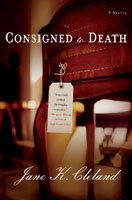
The newsletters keep people up to date on what’s going on – like the major change in cover art that will occur when Consigned to Death is released as a paperback—and will be carried over in the branding with Deadly Appraisal. You can see the new covers in an article in newsletter, Vol I, No. 6: http://www.janecleland.net/htm/newsletter/newsltr.htm
I also include an unpublished fact about Josie in every issue of the newsletter--fun! Anyone interested in receiving it via e-mail can sign up on the site.
There are photos of Josie’s world on the site, recipes for all of the dishes mentioned in the book, and loads of other informative and fun content!
I’d love to hear from people. Folks are welcome to e-mail me at jane@janecleland.net or call 212.332.9976. As I mentioned above, I’m very good about responding to e-mail, so if they don’t hear from me within a day or two, that probably means I didn’t get it! Please try again or call!
Subscribe to:
Posts (Atom)